This post may include affiliate links. Please read my disclaimer.
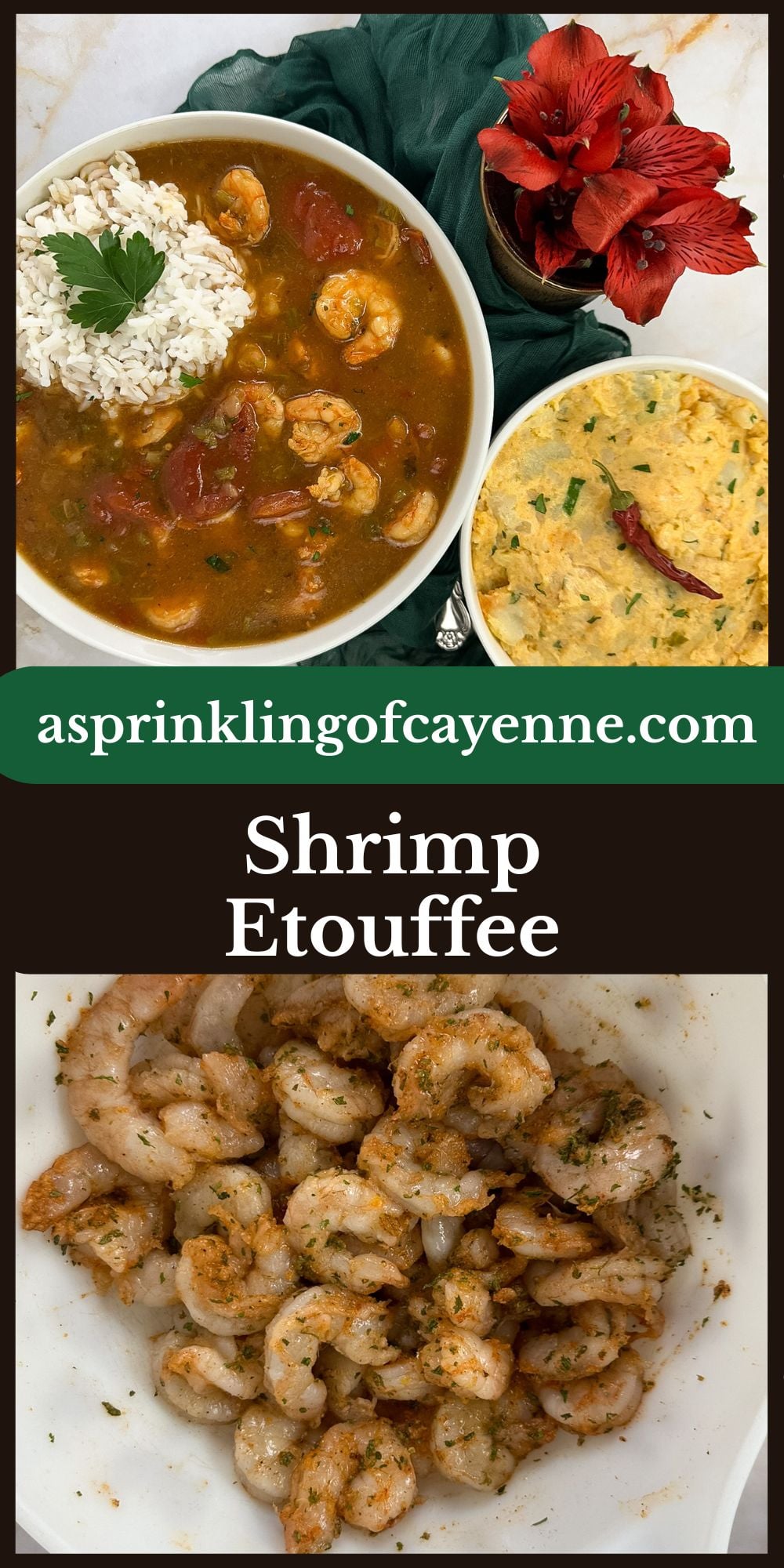
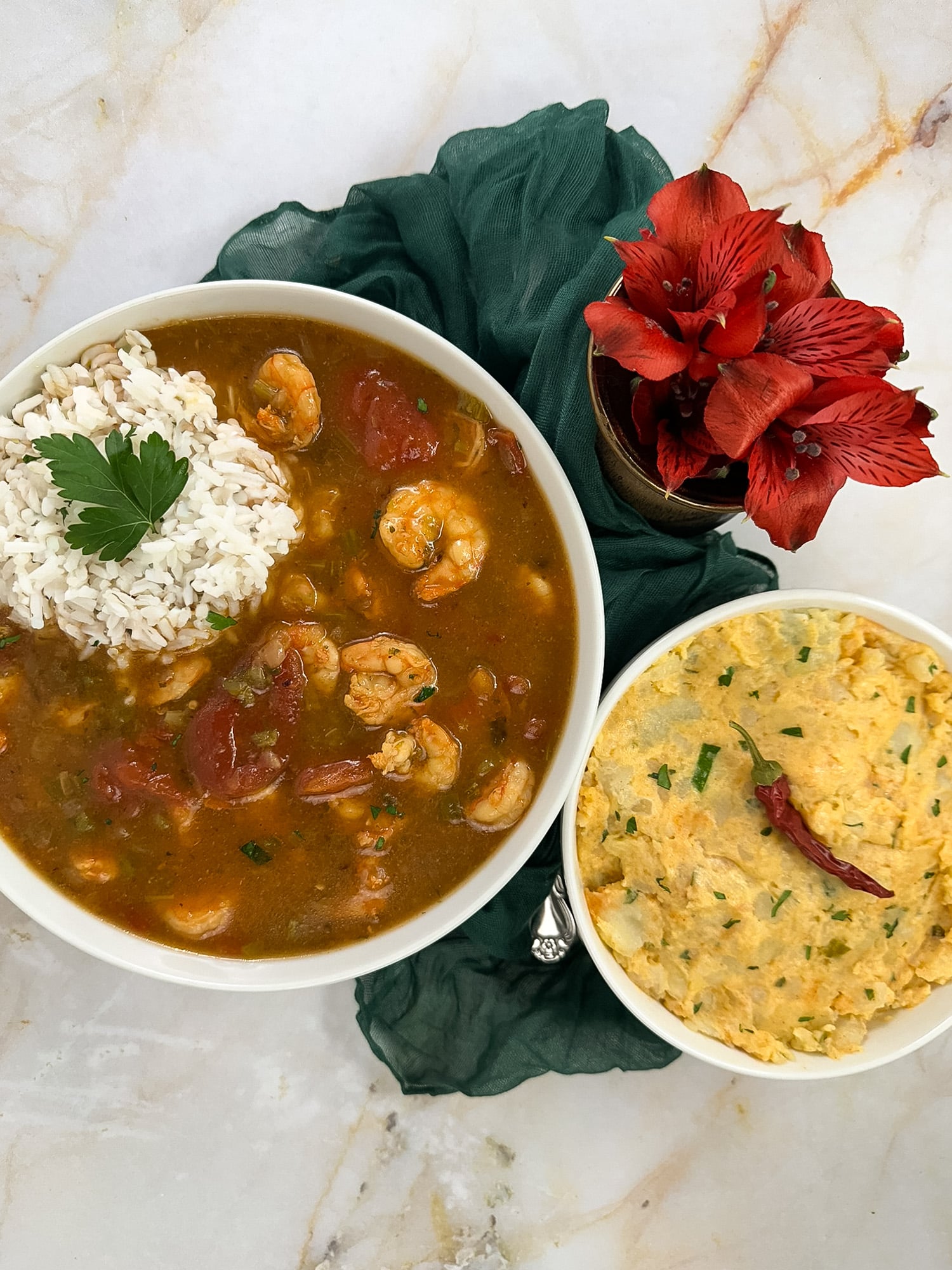
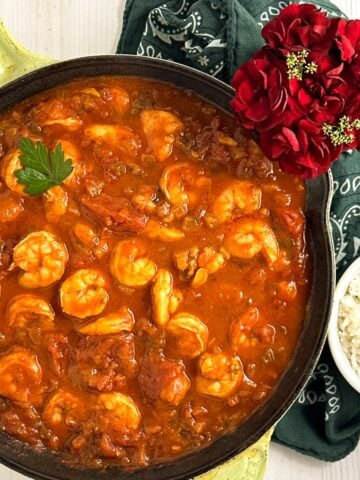
My shrimp etouffee is an authentic take on one of the most beloved culinary treasures of South Louisiana cuisine, y'all!! Incredibly delicious and easy to make, this dish is always an instant dinner hit. Yep and yay...
Want this recipe for deliciousness delivered to your inbox?
Jump to:
- What is Shrimp Etouffee?
- The History of Shrimp Etouffee
- Cajun vs. Creole Shrimp Etouffee
- My Version of Shrimp Etouffee
- What to Serve with Shrimp Etouffee
- Storage
- Freezing
- Thawing
- Reheating
- Shrimp Food Safety
- Top Shrimp Etouffee Recipe Tips
- Faqs
- Ingredients & Essentials
- How to Make Shrimp Etouffee
- More Captivating New Orleans Creole Cuisine Recipes
- Shrimp Etouffee
What is Shrimp Etouffee?
Shrimp etouffee is a Cajun and Creole dish featuring shrimp cooked in a thick, roux-based gravy and traditionally served over rice. The name comes from the French verb 'etouffer,' which means to smother.
The History of Shrimp Etouffee
The origin of this dish is somewhat debated. However, shrimp etouffee is believed to have originated sometime between the 1920s and 1950s in Breaux Bridge, Louisiana. It is widely considered an adaptation of the original crawfish etouffee recipe made famous by the proprietress of the Hebert Hotel.
Cajun vs. Creole Shrimp Etouffee
The main difference between a Cajun and a Creole shrimp etouffee is the inclusion of tomatoes. If it has tomatoes, it's a Creole version, such as this one. If not, then it is a Cajun version. Some cooks use a blonde roux for the Cajun-style etouffee, and use a dark brown roux for the Creole-style dish.
However, as the daughter of a Cajun mom and a lifelong Louisiana resident, I can tell you there are many exceptions to these rules. And, in this modern day, there are as many variations of shrimp etouffee as there are cooks in the kitchen.
My Version of Shrimp Etouffee
My original take on this dish includes a dark brown roux and stewed tomatoes. This technically makes it a Creole shrimp etouffee. However, you can omit the tomatoes and add more broth to easily make this a Cajun-style etouffee.
Any way you make it, this recipe featuring seasoned shrimp in the thick, roux-based gravy is authentic South Louisiana cuisine in both taste and texture. I absolutely love it, and I'm pretty sure that once you try the recipe, you'll not only love it but also keep making it again and again. Indeed!!
What to Serve with Shrimp Etouffee
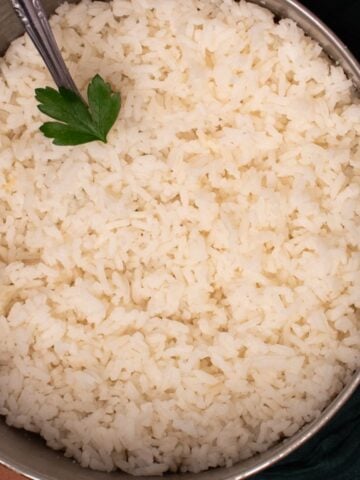

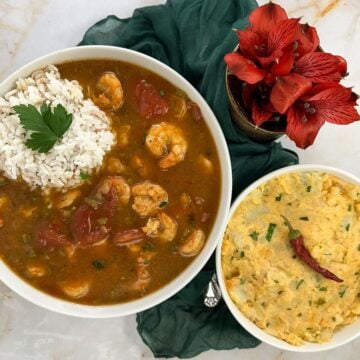
- Freshly cooked white rice on top of shrimp etouffee is a traditional pairing that's just as hearty as it is delicious.
- Cajun cauliflower rice is my original recipe that still feels traditional while lightening the overall meal.
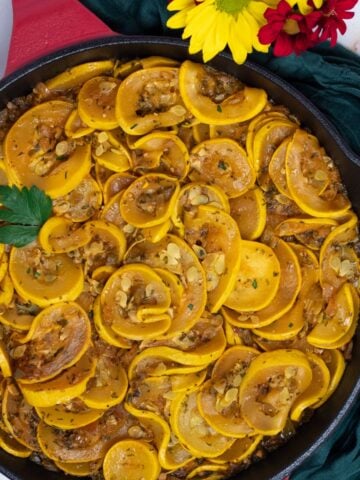
- Cajun-smothered yellow squash is a good side dish that enhances the overall presentation and taste of the main course.
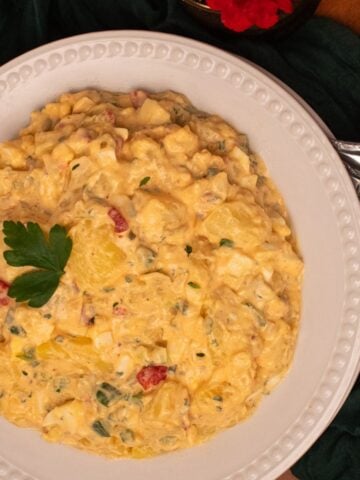
- Cajun potato salad is another beloved staple of South Louisiana cuisine that brings a cool, refreshing balance to the meal.
Storage
Store the leftover shrimp etouffee in an airtight container in the refrigerator for up to 3 days. After this, the dish will start to lose its original flavor and texture.
Freezing
I recommend freezing it in vacuum-sealed bags for up to 3 months. You can also use airtight containers or zippered freezer bags, but the taste and texture of the thawed etouffee may not be as good as when first cooked.
Thawing
Thaw the leftovers in the container or freezer bag in the fridge overnight.
Reheating
For the best taste and texture, reheat the thawed leftovers in a pot on the stove set over medium-low heat, stirring often. You can also use the microwave, reheating in 30 to 45-second intervals, stirring in between.
Shrimp Food Safety
Use an instant-read thermometer to ensure that the shrimp are at least 145 degrees before removing the etouffee from the heat.
Top Shrimp Etouffee Recipe Tips
For best results, use large shrimp of about 21/25-count per pound. This size is the most visually appealing in the finished dish. And, in my humble opinion, they also taste the best as they are neither too small nor too large for the thick, roux-based gravy.
Season the shrimp and chop the vegetables and herbs the night before you make the recipe. Then, store them all in separate airtight containers in the refrigerator until ready to use. These steps will shave almost all the prep time off the recipe, so you can focus more fully on the cooking steps.
Preparing the Trinity Roux™ correctly is the most important step in this recipe. Therefore, take your time and focus on getting it right. Once you do, the rest of the recipe is a breeze.
Faqs
The biggest difference between them is that shrimp Creole is made without a roux, whereas the roux is one of the most important aspects of the etouffee. Although this may seem minor to novice cooks of New Orleans cuisine, it's actually a major difference that comes through in both taste and texture.
It's pronounced ah-too-fay or eh-too-fay.
For the best presentation, serve this dish in a shallow bowl or on a large plate, with a bit of rice on top. Then, garnish each serving with finely chopped fresh parsley and/or thinly sliced green onions.
Although both dishes start with a roux, etouffee usually includes only one protein, namely crawfish or shrimp, that's smothered in about 2 cups or less of liquid, making it a stew. In contrast, gumbo generally includes multiple proteins, such as shrimp, chicken, and sausage, that are brought to a boil and then simmered in at least 8 cups of liquid, making it a soup.
Not adding enough seasoning to the dish. That's why this recipe includes seasoning the raw, fresh shrimp before adding them to the roux-based gravy. The shrimp seasoning is evenly distributed throughout the dish as it cooks, ensuring the prepared etouffee is perfectly seasoned straight out of the pot.
Shrimp etouffee is made with a roux-based gravy and served with cooked rice. Jambalaya is not made with a roux but with browned vegetables and seasoned meats and seafood pieces, mixed with uncooked rice and cooked in one pot until the rice is completely cooked.
Ingredients & Essentials
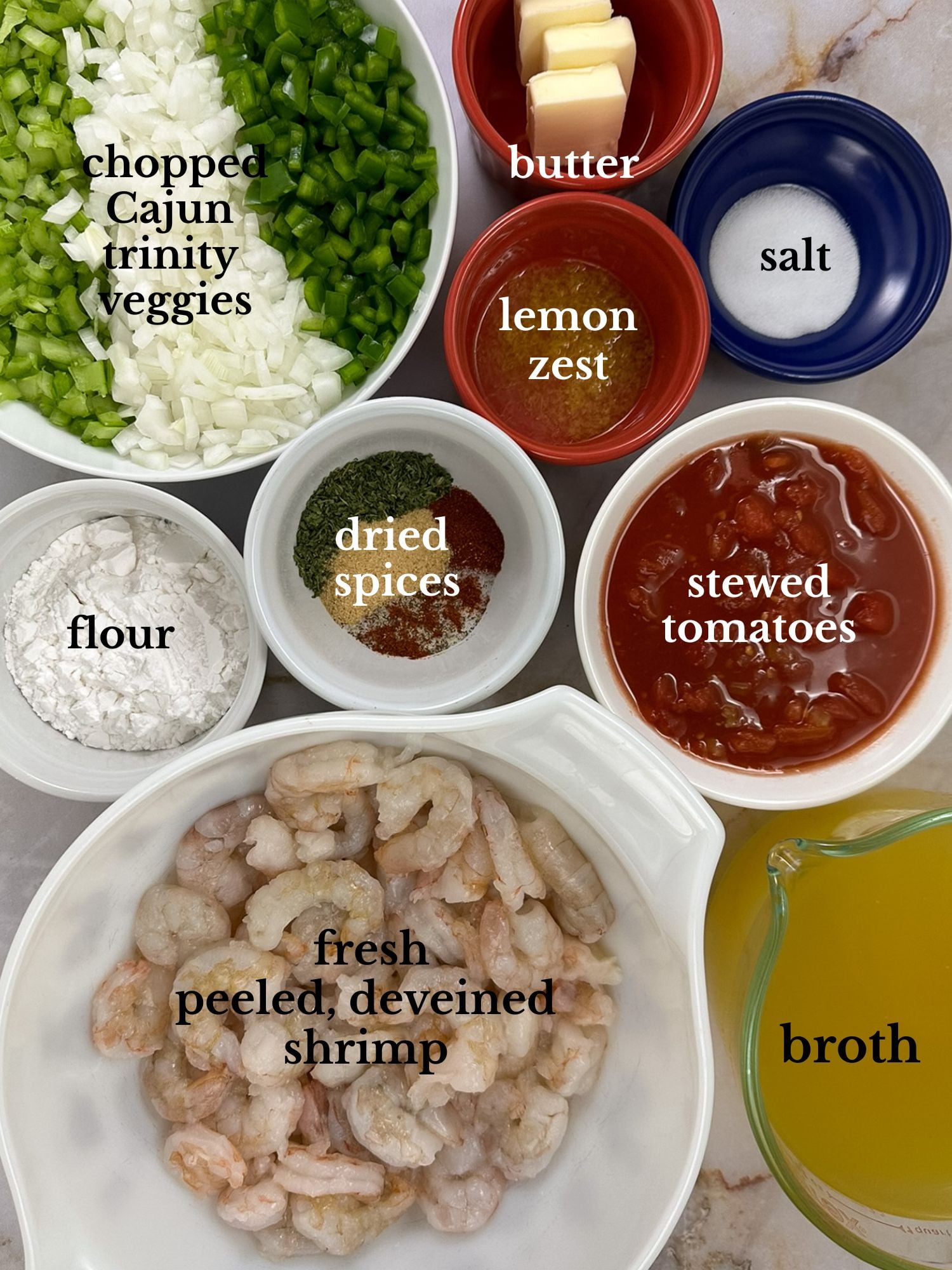
- Fresh, peeled, and deveined large shrimp are perfect for making this Louisiana shrimp etouffee recipe. That said, you can use any size that you have on hand.
- My Trinity Roux™ creates the authentic flavor base for this dish. Its color comes from the browned, chopped onion, bell pepper, and celery, which are formed into a roux with the addition of a slurry of tapioca flour, arrowroot flour, or cornstarch. It's quite unconventional, yet just works beautifully. My roux is also super easy, and most home cooks can pull it off on the first try.
- The lemon zest and dried spices season the fresh shrimp to perfection. If you don't have fresh lemons on hand, substitute 1 teaspoon of lemon pepper seasoning and reduce or omit the black pepper called for in the recipe.
- Stewed tomatoes make this a proper Creole shrimp etouffee recipe. They deepen the flavor profile deliciously and give the dish a beautiful crimson hue. However, you can omit them to make this dish Cajun-style if desired.
- Chicken broth rounds out the dish without overpowering the seasoned shrimp's flavor. You can also use seafood stock, but it will give the finished dish a stronger, more robust seafood flavor that may make it hard to fully enjoy the seasoned shrimp. Truth be told, the choice of using chicken broth or seafood stock is neither right nor wrong, but simply a personal preference.
How to Make Shrimp Etouffee
To begin the recipe, pour the lemon zest and the dried seasonings over the peeled, deveined shrimp.
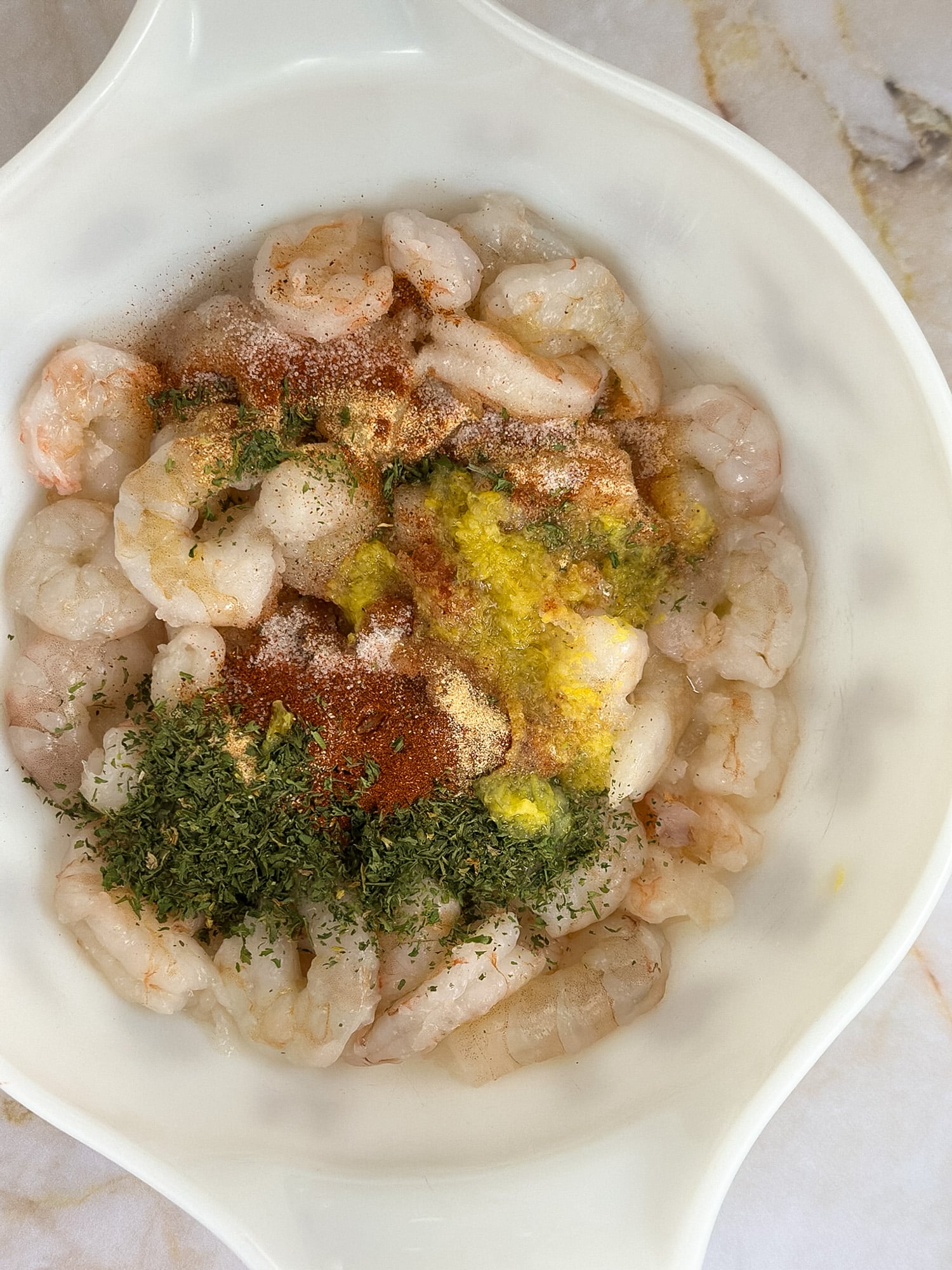
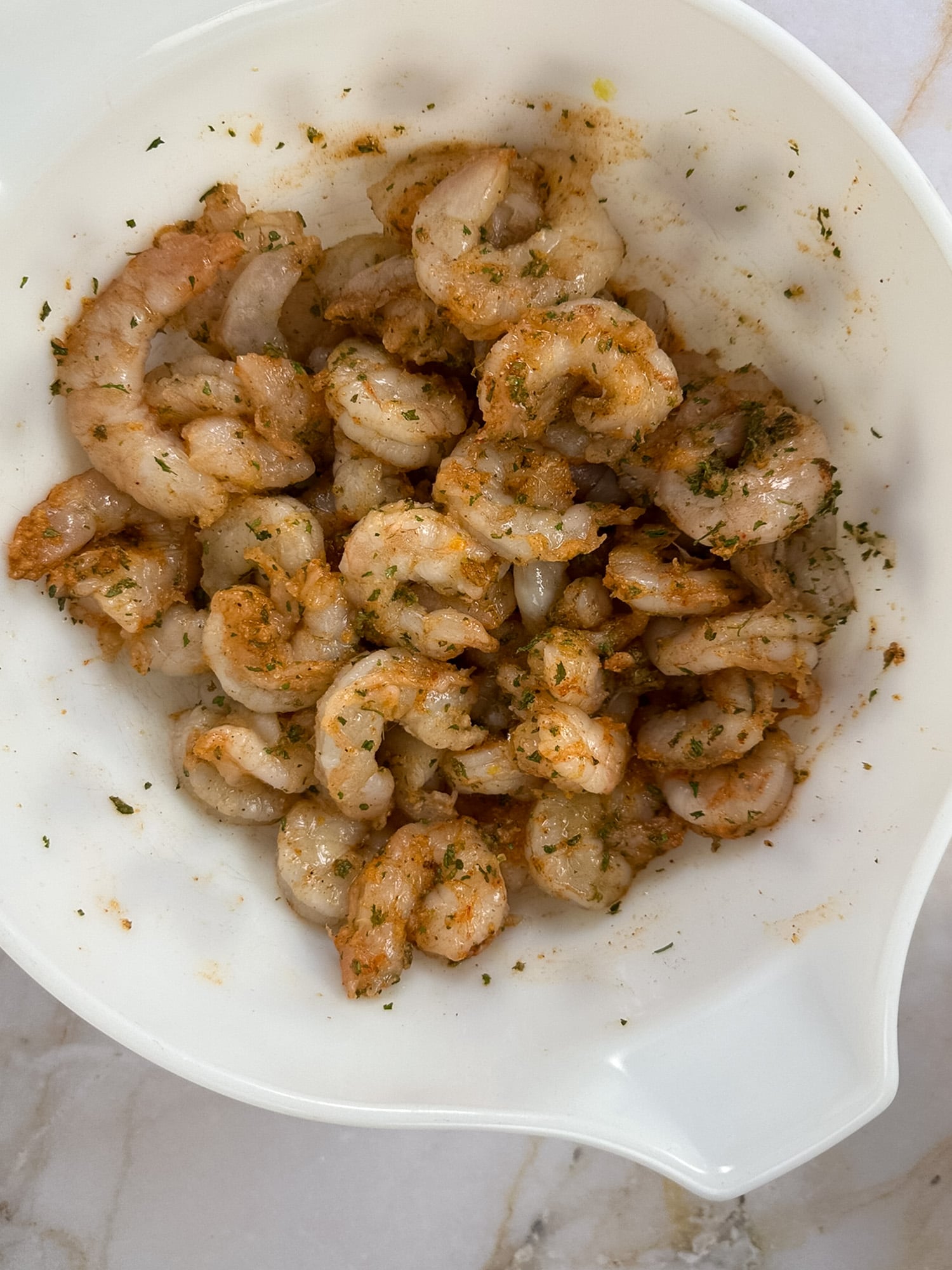
Stir to combine, then set aside.
Prepare the Trinity Roux™.
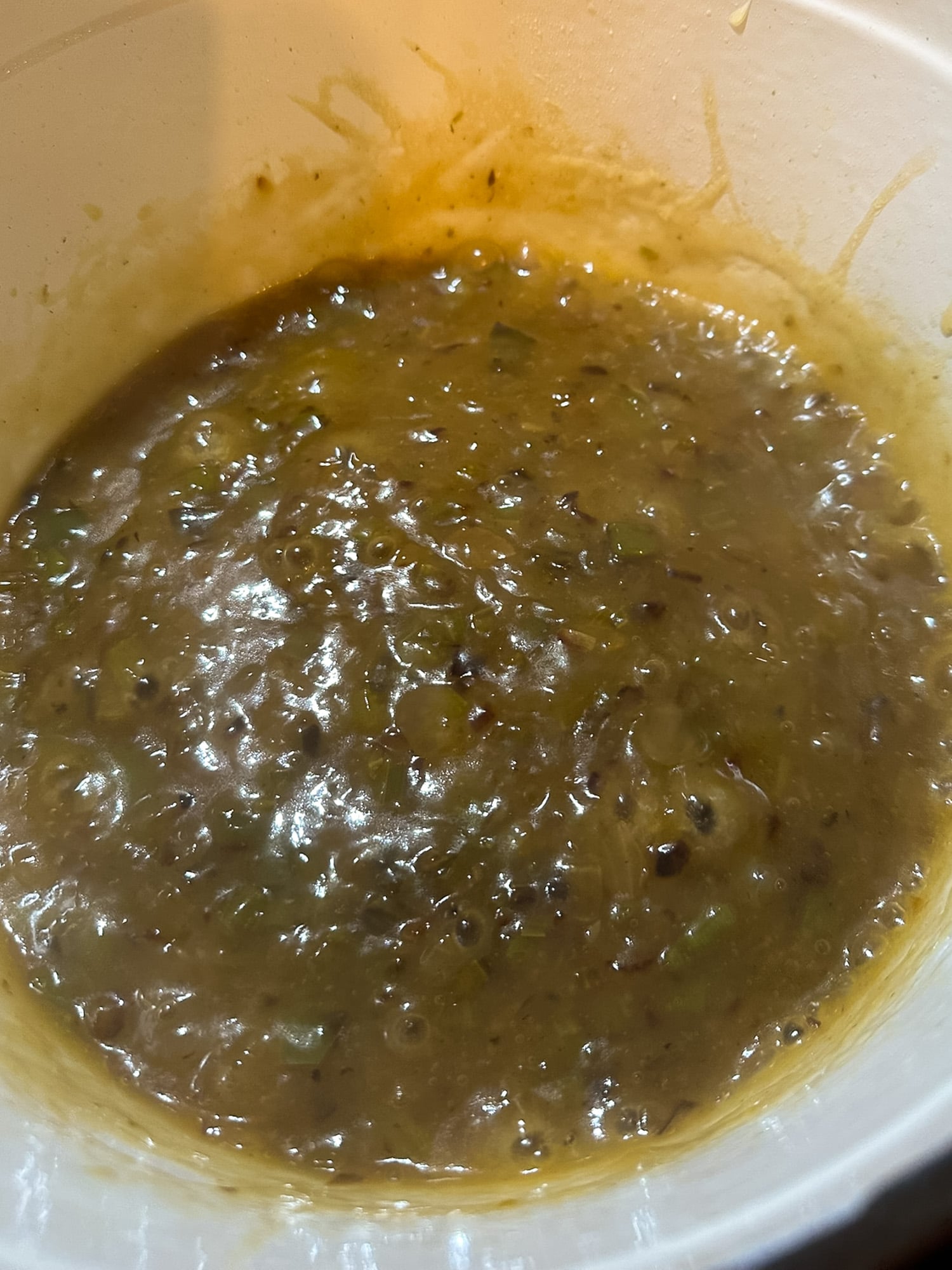
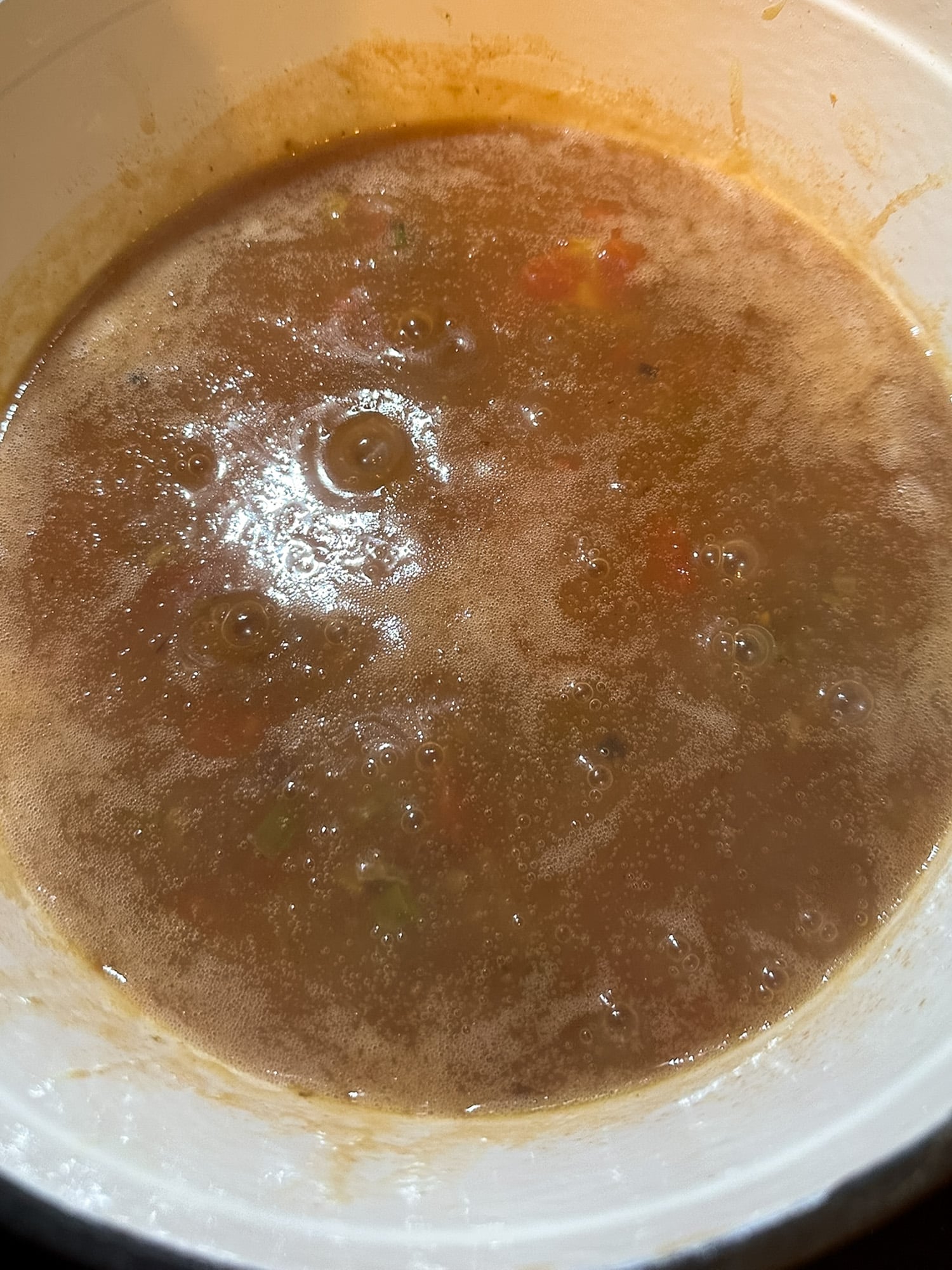
When the roux is ready, reduce the heat. Then, add the tomatoes and broth. Stir to combine.
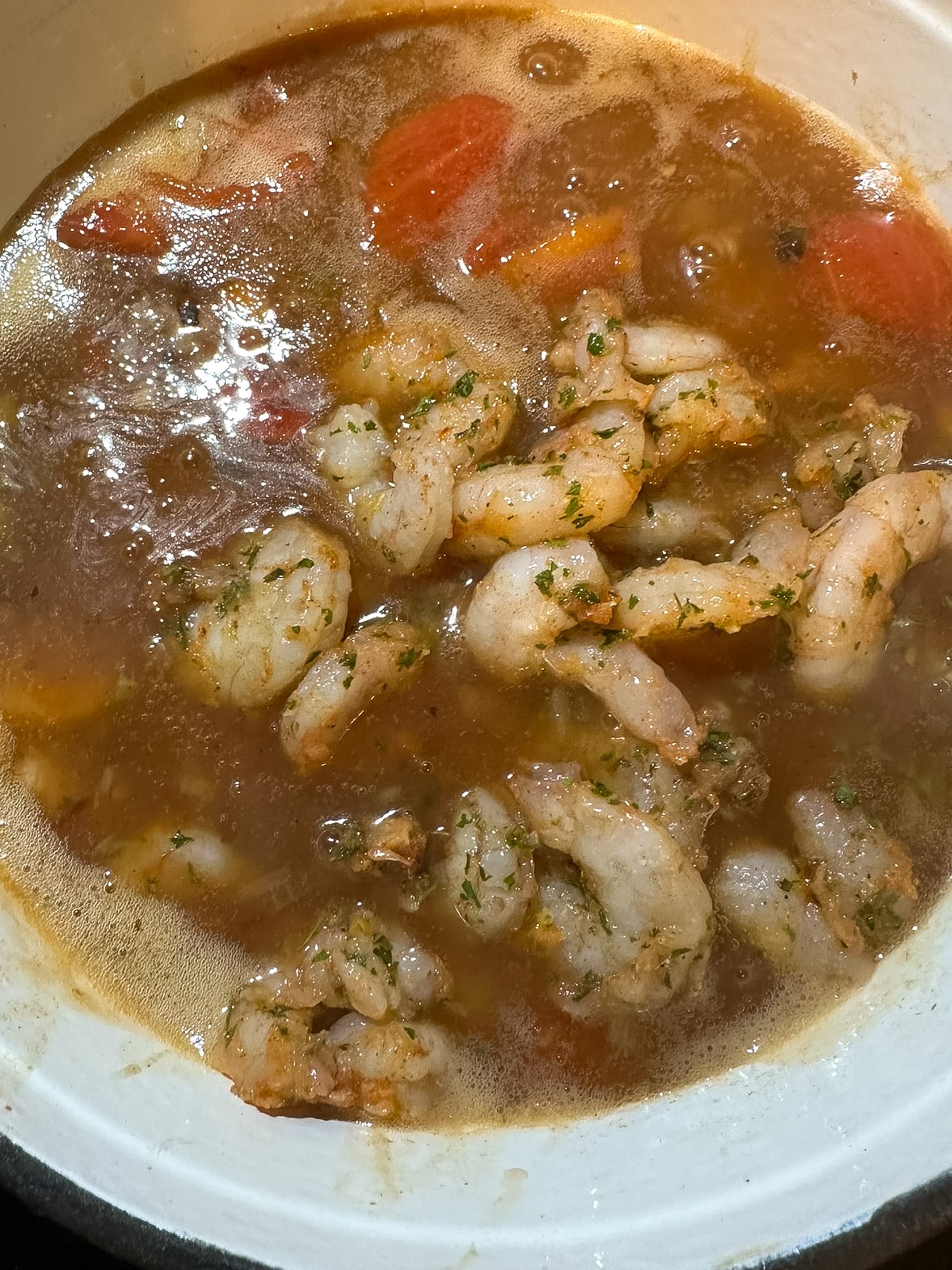
Finally, stir the seasoned shrimp into the pot, then simmer until done.
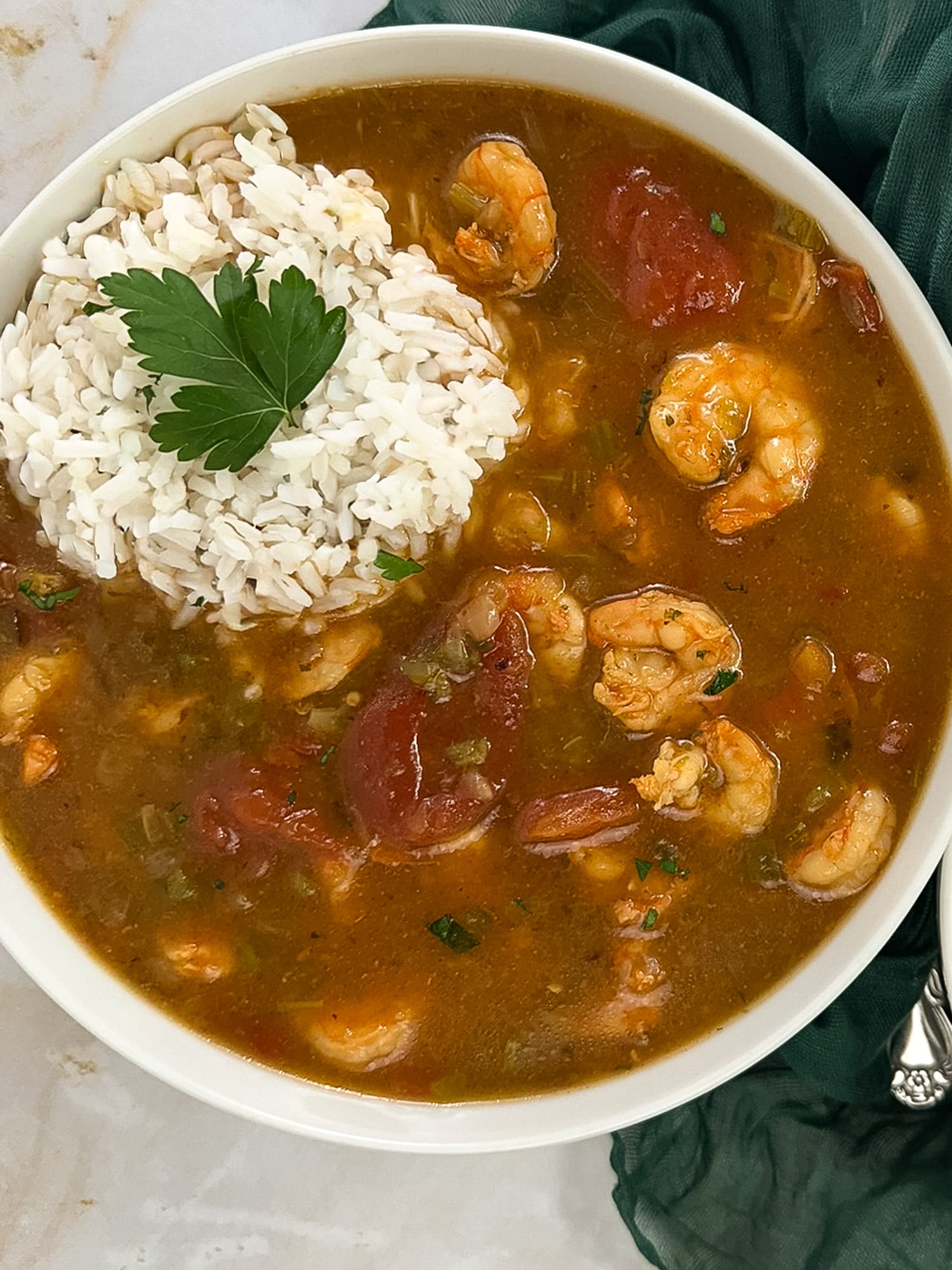
And that's it, y'all!!
The rich, thick red gravy and seasoned shrimp complement each other to eyes-rolling-in-the-back-of-your-head perfection!! When paired with the customary rice, the meal is a hearty, Sunday-dinner-style dish that commands oohs and aahs from both kids and adults.
Truth be told, once you've eaten it for the first time, you'll certainly understand why this dish has stood the test of time. Yes, it's a super tasty dish. But, it's also one that really hits the spot when you're in need of just the right soul-hugging comfort food. For sure!!
Share with those whose growth, transformation, and drive never fail to astound and inspire you. Much food love, and see y'all on the yum side...
This post was originally published on April 28, 2020, and was updated with new pictures and content and republished under a new link on June 12, 2026.
More Captivating New Orleans Creole Cuisine Recipes



Shrimp Etouffee
Ingredients
For the Seasoned Shrimp
- 2 pounds fresh shrimp large size of 21/25-count is best
- 1 tablespoon dried parsley flakes
- 1 tablespoon garlic powder
- 1 teaspoon lemon zest
- 1 teaspoon paprika
- salt, pepper, and cayenne pepper to taste I used about ½ teaspoon salt, ¼ teaspoon black pepper, and ⅛ teaspoon cayenne
For the Trinity Roux™
- 3 tablespoons butter or oil
- 1 ½ cups chopped yellow onion
- ¾ cup chopped green bell pepper
- ¾ cup chopped celery ribs, trimmed of white parts
- ⅔ cup chicken broth, divided
- ½ teaspoon salt
- ⅓ cup tapioca flour, arrowroot flour, or cornstarch
- 2 cups chicken broth can also use water or seafood stock
For the Shrimp Etouffee
- 1 cup chicken broth or seafood stock
- 1 14.5-ounce can stewed tomatoes
- white rice for serving
- hot sauce for serving, optional
- 1 tablespoon sliced green onions for garnish, optional
- 1 tablespoon chopped fresh parsley for garnish, optional
Instructions
- Season the shrimp with the dried parsley flakes, garlic powder, lemon zest, paprika, and salt, black pepper, and cayenne pepper to taste. Set aside.
- Prepare the Trinity Roux™ in a large heavy skillet or Dutch oven over medium-high heat.
- Once the roux is ready, turn the heat down to medium-low.
- Add the chicken broth, stewed tomatoes, and seasoned shrimp to the pot then stir until well incorporated.
- Cook for 20 to 30 minutes, stirring often, or until the etouffee gravy thickens and an instant-read thermometer inserted into the shrimp reads at least 145 degrees Fahrenheit.
- Remove from the heat and serve immediately.
Video
Notes
The information shown is an estimate provided by a third-party, online computer-generated nutrition calculator, not a registered dietitian or certified nutritionist. Actual nutritional content will vary based upon brands used, measuring methods and individual portion sizes, along with other factors.
See our full nutrition disclaimer here.